


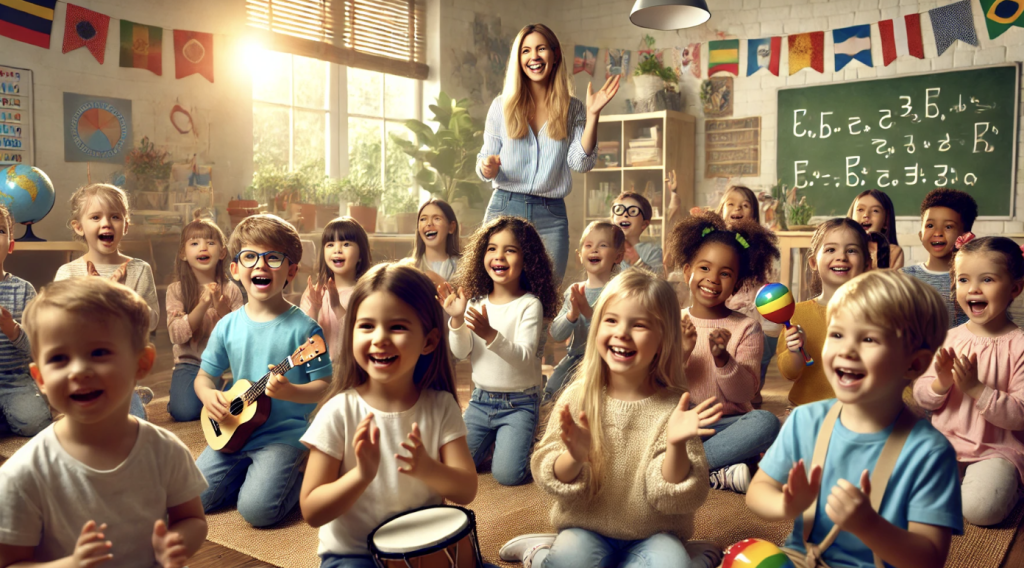
Learning a new language can be a magical journey for children, but it’s not without its challenges. From struggling with pronunciation to feeling too shy to speak, these barriers can make language learning seem daunting. At Armelle For Kids, we’ve discovered a powerful tool to help overcome these obstacles: music. Through engaging melodies and rhythms, children can learn a new language in a way that feels natural and enjoyable. Let’s dive into how music can help kids master new languages and break through common learning barriers.
The Power of Music in Language Learning
Music and language share many similarities—they both rely on rhythm, melody, and patterns to convey meaning. When children learn a new language through music, they engage with these elements in a way that feels intuitive and fun. This approach is particularly effective for young learners who might find traditional language lessons intimidating or dull. Singing along to songs in a new language helps children internalize the sounds and rhythms of that language. This natural repetition allows them to remember words and phrases more easily.
Overcoming Pronunciation Challenges Through Music
Pronunciation is one of the trickiest aspects of learning a new language. Different languages have unique sounds that can be difficult for children to master, especially if those sounds don’t exist in their native language. However, when these challenging sounds are embedded in a song, children can practice them repeatedly without feeling like they’re drilling.
For example, at Armelle For Kids, we use simple, catchy songs in French to teach children the correct pronunciation of words. As they sing along, they naturally mimic the sounds, guided by the melody. This makes it easier for them to get the pronunciation right, as the music provides a framework that their voices can follow.
Reducing the Fear of Speaking
Many children are hesitant to speak a new language, especially if they’re worried about making mistakes or not being understood. This fear can be a significant barrier to progress. Music, however, creates a safe and supportive environment where children can practice speaking without the pressure of perfection.
When children sing, they’re not just speaking—they’re performing. This shift from simply trying to get the words right to focusing on the fun of singing helps alleviate the fear of making mistakes. In a group setting, singing together fosters a sense of community. Children see that everyone is learning and making mistakes, which helps reduce their anxiety about speaking out.
Keeping Kids Engaged with Music
Young children, in particular, have short attention spans, and keeping them engaged in a language lesson can be challenging. Music is a fantastic tool for maintaining their interest. The interactive nature of musical activities—whether it’s clapping along to a beat, banging a tambourine, or strumming a guitar—keeps children actively involved in the lesson.
Although Armelle For Kids doesn’t teach children how to play instruments formally, we let them explore simple instruments during lessons to keep the atmosphere lively and engaging. This hands-on approach helps children associate the words they’re learning with physical actions, making the language stick even more.
Real-Life Example at Armelle For Kids
At Armelle For Kids, we see the transformative power of music in language learning every day. One of our favorite activities is teaching French vocabulary through a simple song about animals. The children sing along while pointing to pictures of the animals, repeating the words until they feel comfortable with the pronunciation. To keep things lively, we hand out small instruments like maracas or tambourines, and the children play along with the rhythm of the song.
Not only does this method make the vocabulary stick, but it also builds their confidence in speaking. We’ve had children who were initially shy about trying to speak French who, after a few sessions, were eagerly singing the words and using them in conversation. This hands-on, musical approach helps break down the barriers to learning and makes the process enjoyable.
Practical Tips for Parents and Teachers
Incorporate Songs Into Daily Routines: Use simple songs to teach common phrases or vocabulary. Singing during activities like getting dressed or preparing meals can make learning feel less like a lesson and more like fun.
Use Repetition to Reinforce Learning: Choose songs with repetitive lyrics to help reinforce the language. The more children hear and sing the words, the more likely they are to remember them.
Encourage Participation with Instruments: Even if it’s just clapping or tapping a beat, getting children involved with the rhythm can help keep them engaged and make the learning experience more interactive.
Create a Safe Space for Learning: Use music to create an environment where mistakes are part of the process. Singing in a group can help children feel more comfortable and less self-conscious about speaking a new language.
Make It Fun: The key to using music effectively in language learning is to make it enjoyable. Keep the atmosphere light and playful, and focus on the joy of learning together.
Music is a powerful tool for overcoming the common challenges children face when learning a new language. At Armelle For Kids, we see every day how music helps children build confidence, improve pronunciation, and stay engaged in the learning process. By incorporating songs, rhythms, and simple musical activities into language lessons, we can help children not only learn a new language but also enjoy the journey.